Norton The Show-Me Standout

January 07, 2020

During the month of January, discover the red wine that stands out from the rest. Norton is a favorite among those who prefer a dry, red wine. Bold in nature, this Show-Me standout has an award-winning legacy that dates back more than a century ago.

Although the grape varietal was discovered in Virginia, it found a home and notoriety in Missouri. As early as the 1840s, Norton took root in Hermann, and it wasn’t long before Missouri’s signature red wine began garnering worldwide recognition. In 1873, a Norton vintage from a Hermann winery won gold at the World’s Fair in Vienna.

Today, Missouri winemakers carry on the legacy established by German settlers in Hermann. Their award-winning Norton wines are honored at the national and international level. Since 2011, the best Norton in the state has been awarded the C.V. Riley award at the annual Missouri Wine Competition. The award is named in honor of Charles Valentine Riley, the state’s first appointed entomologist who is credited with helping save the French wine industry. Riley discovered that American rootstock were naturally resistant to the Phylloxera, a pest that nearly decimated the vineyards in France.

C.V. Riley winners for best Norton

2011: Stone Hill Winery - 2009 Estate Bottle Norton
2012: Montelle Winery – 2009 Norton
2013: Stone Hill Winery - 2011 Cross J Vineyard Norton
2014: Stone Hill Winery - 2012 Cross J Vineyard Norton
2015: Chandler Hill Vineyards - 2013 Savage Norton
2016: Noboleis Vineyards - 2014 Norton
2017: Stone Hill Winery - 2015 Norton
2018: Augusta Winery - 2016 Norton Estate Bottled
2019: Stone Hill Winery - 2017 Estate Bottled Norton

Norton is a full-bodied dry, red wine with dark fruit and spicy oak flavors, complemented by aromas of dark berries and cherries. The All-American wine pairs excellently with beef, as well as a variety of other foods, including smoked cheeses, salmon and dark chocolate.

Norton is the most popular grape grown in Missouri. Hardy and incredibly disease resistant, the varietal thrives on 300 acres in the state, accounting for nearly 18 percent of the overall total. It was designated Missouri's official state grape in 2003.

During the month of January, discover the bold, red wine that has delighted critics for more than a century. Experience Norton, the Show-Me Standout.


2020 Wine Lover's Calendar

January 02, 2020

The new year is here and there are many things to look forward to in Missouri wine country. On our calendar, you’ll find several months dedicated to the promotion of our Show-Me State’s  grape varietals as well as important dates in the wine industry. As you enjoy the upcoming seasons, keep these Missouri wine-centric holidays in mind and celebrate accordingly – with a glass of Missouri wine, of course! 


Peach Wine Ice Cream

December 17, 2019

If you love wine and ice cream, try mixing them together. We served this peach wine ice cream at an event and it was a crowd pleaser!

Holiday Wine Cocktail

December 12, 2019

Add a new tradition to your holiday season. Treat yourself to a delicious cocktail featuring a dry red wine from your favorite Missouri winery. With just a few ingredients, this crowd-pleaser is super easy to make. And to top it all off? Whipped cream – the pièce de résistance in this new festive favorite.


Servings: 2 to 3

Ingredients
• ½ cup dry red Missouri wine
• ¾ cup mixed berries
• 1 tsp sugar
• Ice 
• Whipped cream
• Cocoa powder

Blend together the wine, mixed berries, sugar and a handful or two of ice. (Although we incorporated a medium-bodied dry red wine into the recipe, a full-bodied Norton is also an excellent choice.) Take a break from the blender and taste test your cocktail concoction. Add a little more of this or that from the recipe list until you’re happy with the results. Place the mixture into the freezer for a few minutes, then remove and pour the cocktail into a glass. Top with whipped cream and, for a festive touch, add a sprinkle of cocoa powder. Enjoy!
 

Pirtle Winery Turning a Backyard Hobby into an Award-Winning Winery

November 26, 2019

Elbert Pirtle’s passion for winemaking began in his own backyard. A math professor at the University of Missouri – Kansas City, Elbert started making wine from the cherry tree that grew on his property. Soon, he was as good at making delicious wine as he was at solving complex mathematic equations. In 1978, he and his wife Patricia embarked on a new adventure and opened a winery in Weston, Missouri. 
 
Weston is a charming community located in the northwestern area of the Show-Me State, nearly 40 minutes outside Kansas City. Nicknamed the “Queen of the Platte,” Weston has attracted visitors for centuries, including The Corps of Discovery and Buffalo Bill. These days, the town attracts a different group of visitors, those with a fine taste for wine, who often find their way to an old church building, the home of Pirtle Winery.
 
Built in 1867, the brick building has gone through several transformations throughout the years, first as a German Lutheran Evangelical Church, then as a bottling works location for a brewery. It served as a Second Baptist Church before falling into a state of disarray. The building was in danger of being torn down and turned into a parking lot when Elbert and Patricia stepped in to save it. 
 
Today, Scott and Ross Pirtle carry on their father’s legacy with the hope of entrusting the winery to their own children someday. The winery offers a full lineup of award-winning wines, ranging from dry to sweet, including several outstanding varieties of mead. In addition to being bottled, three of their wines are canned. Wine slush mixes are also available, the perfect match for a bottle of delicious Pirtle wine.  
Although there is ample seating inside the winery, many visitors opt to go outside on a beautiful day and sip wine on the canvas-covered deck or vine-covered wine garden. 
 
More than 40 years have passed since Elbert and Patricia left the academia world to start a winery. While there have been some challenges along the way, the couple and their children consider themselves lucky to have been part of the dynamic wine industry. Many visitors have entered the double doors of their winery and they treasure every single one of them.
 
“My parents still get together with customers they met years ago and we continue to develop friendships with the next generations with our children,” says Scott, who, along with his brother Ross, took over ownership of the winery in 2005. “Many of our events are made possible by the support of our friends and customers.” 
 
The Pirtles organize the Weston WineFest, a popular festival that takes place mid-May in the beautiful community. The event brings in hundreds of visitors and features nearly a dozen wineries, live music and great food. 
 
The next time you plan an adventure in Missouri wine country, explore Weston, the place that dubs itself the best small town in Missouri, and visit the Pirtles in their beautiful location. Their building is one of many in town listed on the National Register of Historic Places. Arrive as a visitor and leave as a friend. You’re always welcome back.  
Download this Weston trip planner and start planning your trip today.

Tips for Storing Wine

November 22, 2019

You’ve built up quite the wine collection but you’re not sure how to keep it fresh. We’ve got some tried-and-true wine storage tips for you!  

To chill or not to chill? Both red and white wine can be stored between 45- and 65-degrees Fahrenheit. This temperature range allows the flavor to improve while keeping other harmful chemical reactions in check. It is important to keep wine at a constant temperature. Even the shortest exposure to extreme temperatures can cause chemical reactions that will ruin wine. What does that mean for storing wine in the refrigerator? While most fridges are typically too cold for wine storage, storing wine here may be fine for a couple of months. The average fridge eliminates humidity as it cools and can dry out a wine’s cork. When the cork dries out, air gets in and spoils the wine.

Lay it down or stand it up? – Keeping bottles on their side helps keep the cork moist and is a space-saving way to store your wines.

Near a window? It is important to keep wine from heating up. This can happen when it’s in direct sunlight or next to bright interior lights. Wine is best kept in a dark, cool place so be strategic when adding a wine display.

So where is the best place to store your wine, if you don’t have a cellar? A dry, fairly cool basement is ideal. Some suggest putting a cupboard under the stairs. If you do not have access to basement storage, your best bet is a wine rack that is located in a cool place.

If you’re planning to store an opened bottle of wine, remember to recork it promptly and tightly. You can place some wax paper around the cork and slide it back into its original position. The wax will ease the cork into the top and also ensure that no stray parts of the cork drop into the bottle. Rubber corks or a wine vacuum pump are good options if the original cork is not viable. Opened wine should also be stored upright. This reduces the surface area in the bottle that is exposed to oxygen and will help the wine stay fresh longer.

Whichever storage option you choose, we hope Missouri wines are in your collection!

Recipe Round-Up Cooking with Chambourcin

November 19, 2019

November is Chambourcin month in Missouri and what better way to celebrate than to bring one of these delicious recipes to your family and friends for Thanksgiving. From cranberry sauce to dessert, these are a few of our favorite Chambourcin recipes.

Chambourcin Cranberry Sauce

This Chambourcin Cranberry Sauce, or Cham-berry Sauce, is easy to make, stores well and adds tangy flavor to a wide range of dishes. This recipe should definitely make it onto your Thanksgiving table, but it’s also great with pork, as a condiment on sandwiches, served over warm brie, or simply a spread on your morning toast. Missouri Chambourcin, a dry red wine, really kicks up the flavor and complexity of this sauce. Give it a try today!

Time: 30-40 minutes

Yield: 6-8 servings

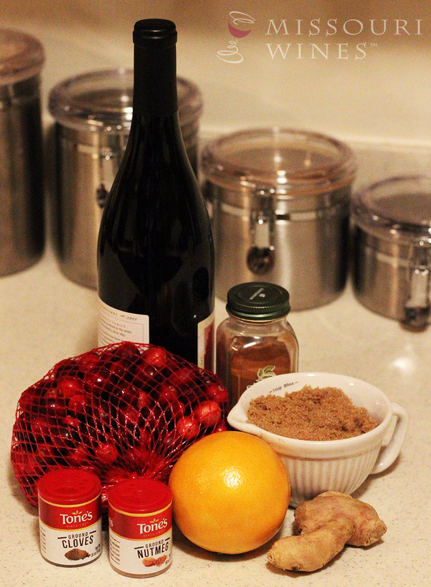
Ingredients:

1 cup dark brown sugar
1/2 cup water
1 bag (12oz) fresh cranberries
1 cup Missouri Chambourcin wine
1 medium navel orange 
2-3 (1/4” thick) slices of fresh ginger [or ½ tsp ground]
1/2 tsp cinnamon
1/8 tsp cloves
1/8 tsp nutmeg
Directions:

Zest and juice the orange, set aside.

Add sugar and water to a medium saucepan over medium-low heat. Stir and heat until sugar is fully dissolved.

Rinse cranberries, add to pot and stir to coat in the sugar water mixture.

Place lid over pot and increase heat to a gentle simmer until all cranberries have popped.

While simmering, peel and slice the ginger (crush with the flat of a knife or the back of a spoon just before adding to help release the flavors.)

Once cranberries have all popped, add remaining ingredients: wine, ginger, orange zest and juice, cinnamon, cloves and nutmeg. 

Allow mixture to simmer, stirring occasionally until it becomes thick and syrupy (20-25 minutes).

Remove from heat, cool and transfer to a serving bowl or a container with lid if making ahead of time. 

This sauce is great fresh (don’t forget to let it cool), but can be made up to a week ahead of serving and kept in the fridge.

Mulled Wine: Spice Up Your Winter 
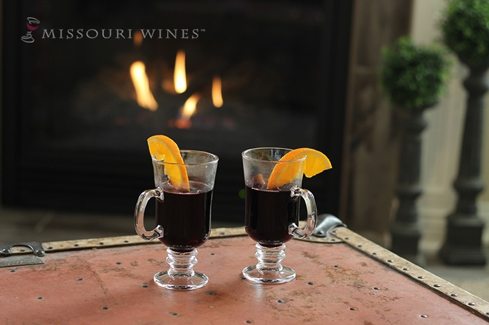
Mulled wine is a warm, flavorful beverage that can remove the chill from a cold winter’s day. Although there are many mulled wine recipes, here is a simple and delicious version that features Missouri Chambourcin and port-style dessert wine, guaranteed to tantalize your taste buds. Watch the video here.

Time: 25 to 30 minutes    |    Yield: 4 to 6 people

Ingredients

750 ml (1 bottle) Missouri Chambourcin
1 cup Missouri port-style dessert wine
1/3 cup Brown sugar
1/2 cup Mulling spices: cloves, nutmeg, star anise, ginger
1 Orange

Garnish (optional)

1 Orange
4 to 6 Cinnamon sticks

Prep work:
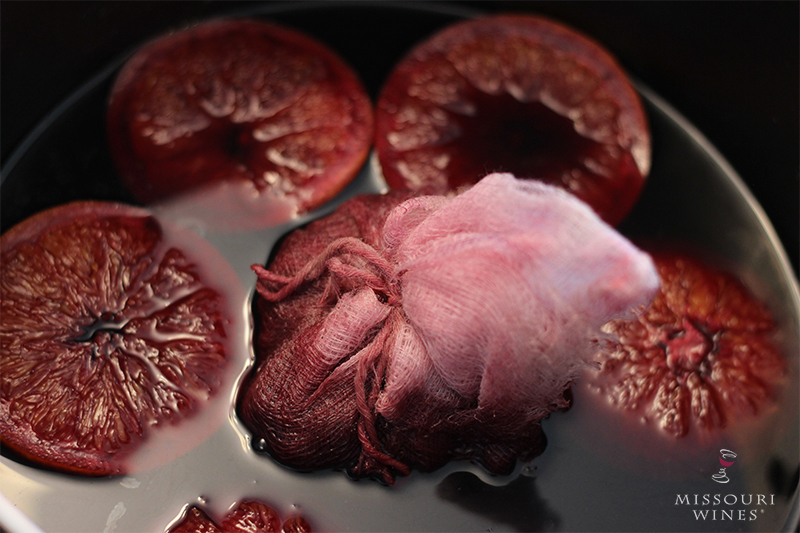
Wrap spices in a cheese cloth. Tie with kitchen twine and set the sachet to the side. Slice both oranges.

Directions:
Pour the bottle of Missouri Chambourcin into a large pot. Add ⅓ cup brown sugar and 1 cup Missouri port-style wine. Heat on medium for 12 to 15 minutes. Add fresh orange slices (from 1 orange) and the sachet of spices then cover with a lid and simmer for 10 minutes. Do not boil. Ladle mulled wine into each glass. Optional: garnish your glass with a fresh orange slice and cinnamon stick.

Serve warm and enjoy.
Mulled Wine Cheesecake
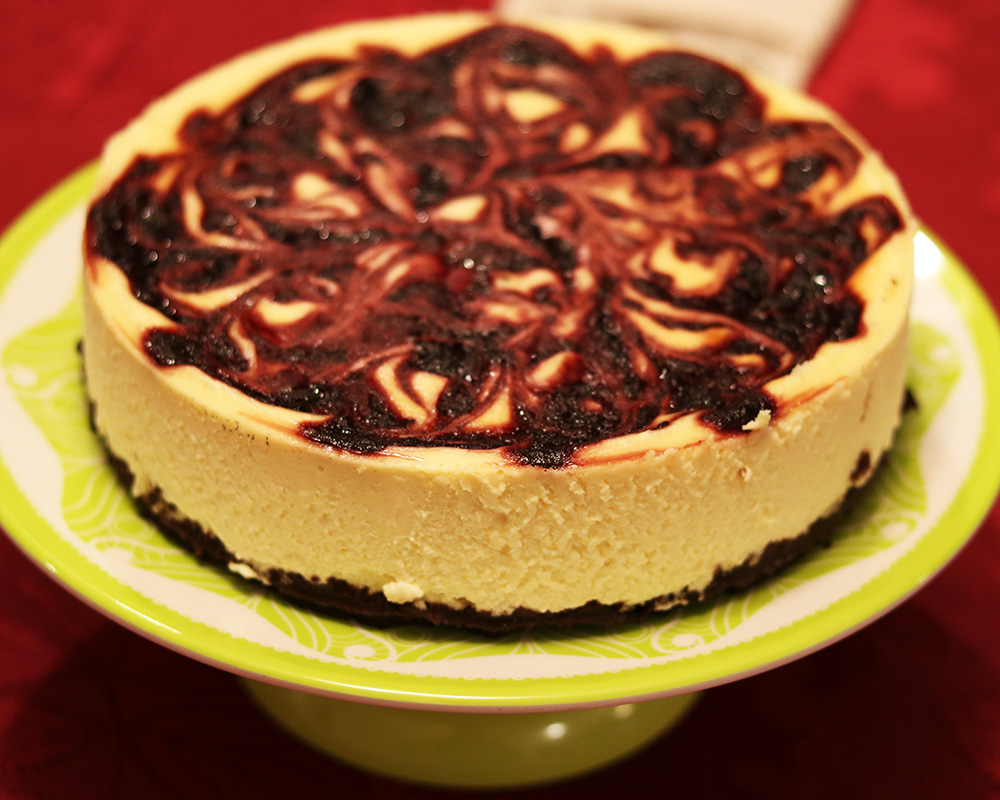
This decadent cheesecake incorporates a mouthwatering mulled wine sauce to create the perfect holiday dessert. It is delicious and festive! Whether you make this recipe for a carry-in at the office or your family’s holiday feast, it is sure to be a huge hit. Cheesecake and wine… it’s a win, win!  

Time: Active - 2 hours, Chill 6 hours or overnight  |  Yield: 10-12 servings
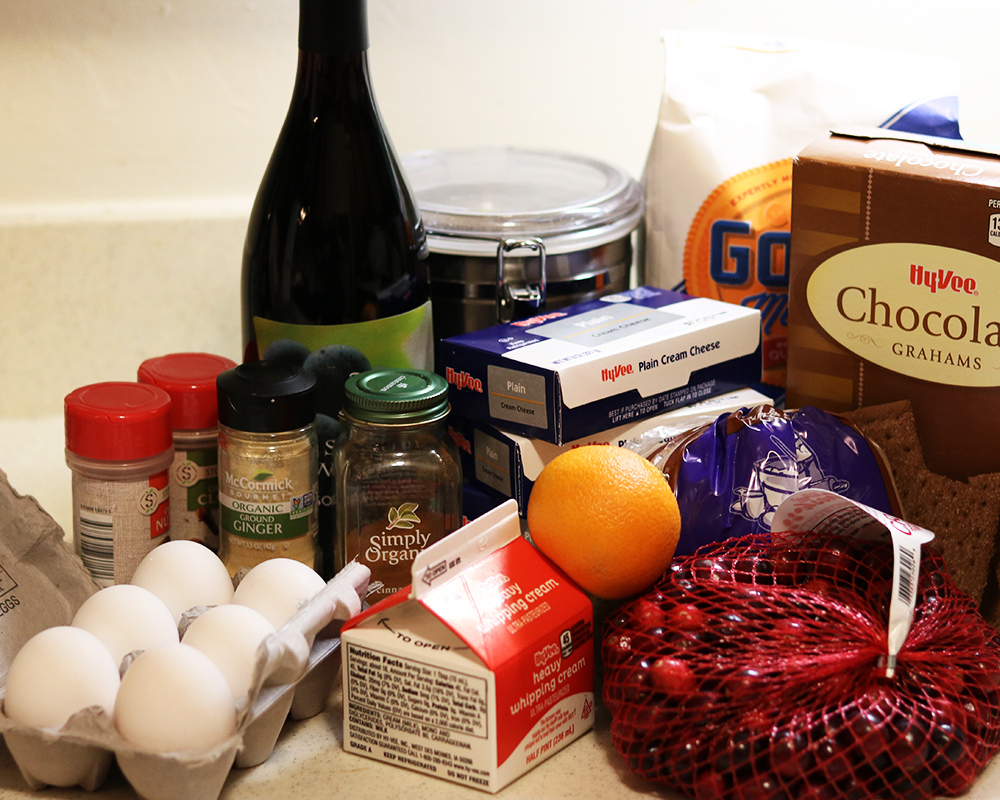
Ingredients:

For the crust-

1 cup Crushed chocolate cookies (Chocolate graham crackers work well)
2 tbsp Cocoa powder
1 tbsp Brown sugar
1 tbsp Sugar
3 tbsp Melted butter

For the sauce-

1 cup Missouri Chambourcin
1/2 cup Cranberries (frozen are fine)
1/2 cup Brown sugar
4-5 strips Orange peel (the peel from approximately ½ of a medium orange)
1 tsp Allspice
1/4 tsp Ground ginger

For the filling-

(4) 8oz packages Cream cheese
1 cup Sugar
4 Eggs
3 tbsp All-Purpose flour
1 cup Heavy cream
2 tsp Vanilla extract

Directions:

Preheat oven to 325 degrees Fahrenheit. Prepare a 9-inch springform pan by wrapping the bottom and sides in a double layer of foil.

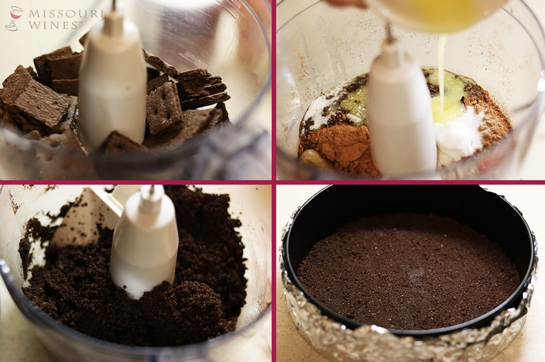
To make the crust, pulse chocolate cookies in a food processor until crushed thoroughly. Add cocoa powder, sugars and melted butter and pulse a few times until combined. (If not using a food processor, crush cookies by placing in a plastic bag and pressing with a rolling pin until they are all crushed. In a medium bowl, add cookie crumbs, cocoa powder and sugars. Stir in the melted butter until combined.) Press the mixture into the bottom of the 9-inch springform pan. Bake for 10 minutes. Remove from the oven and cool on a baking rack while you make the sauce and filling.
To make the sauce, add wine, cranberries, sugars, orange peel and spices to a small saucepan over medium-high heat. Bring to a boil then reduce heat and cook for an additional 5-7 minutes until reduced by approximately half. Remove from heat and set aside. When cool, remove orange peel and blend or process until smooth.

To make the cheesecake filling, blend the sugar and cream cheese with a mixer until smooth. Add eggs one at a time; try not to overmix. Add remaining ingredients slowly until all is combined.

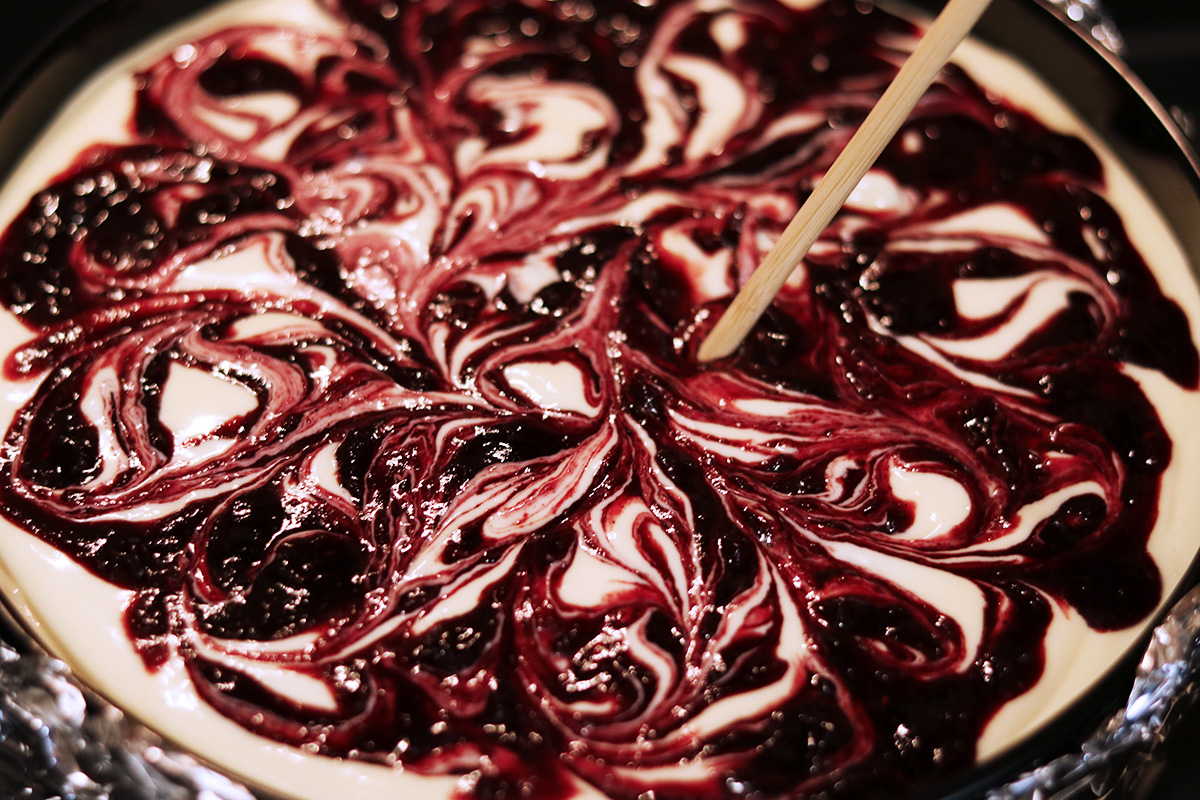
Pour the filling on top of the crust. Drop the sauce by the teaspoon on top. Using a skewer or toothpick, swirl the sauce into the filling. Keep remaining sauce to serve with the finished cheesecake.
Place the cheesecake in a shallow roasting dish and put it in the oven on the center rack. Carefully pour or ladle boiling water (Pro-tip: Using a kettle is an easy way to do this!) until water comes halfway up the sides of the pan. Bake at 325 degrees for 70-75 minutes on the center rack in the oven. It’s done when the cake is set around the edges but still slightly wobbly in the center. Carefully remove from the oven. Take the springform pan out of the roasting pan and cool on a baking rack for 10 minutes; run a knife or icing palette around the edges of the pan to loosen the cheesecake’s sides. Allow the cheesecake to cool on the baking rack in the pan for an additional hour. Refrigerate the cheesecake, uncovered, for 6 hours or overnight.

When you are ready to serve, remove cheesecake from springform pan, slice and enjoy! We recommend putting the extra sauce on the plate as a garnish with each piece of cheesecake. It’s delicious!

*This recipe is adapted from a winning recipe from the MO Wines: Just Desserts Cooking Contest at the 2017 Missouri State Fair. 

Chambourcin Chocolate Cupcakes

It’s not easy to improve upon the classic chocolate cupcake recipe. But here at Missouri Wines, we cracked the code with this mouth-watering wine cupcake! 

These chocolate cupcakes mixed with our very own Missouri-made Chambourcin make for the most moist, rich, full of flavor, scrumptious treat. We would highly recommend this baked good for any occasion. 

(This recipe calls for coconut flour, but the ingredient can easily be substituted with a wheat-based flour.)

Prep Time: 20 minutes | Cook Time: 20 minutes | Yield: 12 Cupcakes

Cupcake Ingredients:

6 tbsp Unsalted butter, room temperature
3/4 cup Dark brown sugar, packed
1/4 cup Granulated sugar
1 Large Egg + yolk, room temperature
3/4 cup Chambourcin wine
1 tsp Vanilla extract
1 cup + 1 tbsp Coconut flour 
1/2 cup Cocoa powder
1/8 tsp Baking soda
1/2 tsp Baking powder
1/4 tsp Salt
1/4 tsp Ground cinnamon

Icing Ingredients:

8 oz. Cream cheese
3/4 cup Chilled heavy whipping cream
2 tbsp Granulated sugar
Sprinkles 

Directions

Preheat oven to 325 degrees Fahrenheit. Line muffin pan with cupcake liners.

In a large bowl, sift together coconut flour, cocoa powder, baking soda, baking powder, salt and cinnamon. Whisk to combine. Set aside. 

In the bowl of a standard mixer fitted with the paddle attachment, mix together butter, dark brown and granulated sugar for 2 minutes until light and fluffy. Add in the egg + yolk, beating well.  Next, mix in the Chambourcin and vanilla. 

Slowly add in the dry ingredients and mix until mixed well. 

Use an ice cream scoop and divide the batter into the lined muffin pan. Bake for 20 minutes, then remove from the oven and let cool for 5 minutes before transferring cupcakes to a wire rack to cool completely. 

In the meantime, make the frosting by whipping together cream cheese, heavy whipping cream and granulated sugar until soft peaks form. Put frosting into piping bag (or Ziploc bag and snip the corner) and pipe the frosting onto the cupcakes. Make sure the cupcakes are completely cool before icing.

Be sure to enjoy with a glass of Missouri Chambourcin!

We hope you will try one of these recipes out for the upcoming holiday. Wine + food is definitely something to be thankful for!


The Evolution of the Corkscrew

November 14, 2019

Wine has been enjoyed by consumers for centuries. However, it wasn’t until the 18th century that bottles with narrow necks were introduced into the market. Corks were found to be the best plug for an airtight seal. 
 
No one knows for sure who first came up with the idea of a corkscrew. Historians say its lineage can be traced back to a tool that removed unspent charges from a musket. Prior to the arrival of the corkscrew, wine consumers used the removable gun worm from a musket tool to dislodge corks. 
 
An Enfield Rifle Musket combination tool 
Photo source: Horsesolider.com
 
Englishman Samuel Henshall is considered the father of corkscrews. He received the first patent for a corkscrew in 1795. Since then, the gadget has been reimagined and redesigned. 
 
Ah So, Two Pronged Cork-Puller, 1864
 
Photo source: Wikipedia
 
This wine opener may be a bit intimidating for wine consumers; however, if used properly, the Ah So can remove a cork fully intact. This is especially beneficial when a cork is in bad condition. Just slide a prong on either side of the cork and lift. The downside is that it takes a little more time and effort to master the art of cork removal with this gadget. The two-pronged cork puller is more commonly known as the Butler’s Friend in England. It is said that the gadget allowed staff to remove corks, check for wine quality and then replace the cork with none the wiser.
 
Double Lever Corkscrew, 1880
 
Photo source: collectorcorkscrews.com
 
William Burton Baker received the British patent for this corkscrew, designed so that both levers were connected at the upper end of the shank. Domenick Rosati, an Italian who immigrated to the United States and worked as a bartender in Chicago prior to Prohibition, received the first American patent. 
 
The Waiter’s Friend, 1882
 
Photo source: Pinterest
 
German inventor Carl Wienke designed this compact corkscrew. The tool, also known as the “Wine Key” and “Sommelier’s Knife,” includes a screw and a single lever. A variation of this design, the double-hinged corkscrew, makes it even easier for wine consumers to remove the cork from their favorite wine. A little known trivia: the term “wine key” is said to originate from the difficulty that some people had saying the man’s last name, pronounced “Venke” in Germany.  
 
Heeley Double Lever Wine Opener, 1888 
 

Baker’s invention (L), Heeley’s (R)
Photo source: Virtual Corkscrew Museum's Daily Newspaper
 
H.S. Heeley didn’t care for William Burton Baker’s design, so he came up with a modified design, attaching the arms to a collar that slid on a shaft. Spanish industrial designer David Olaneta designed and manufactured the winged owl version, a rack and pinion mechanism. The wing is a corkscrew style commonly used in households today.
 
Walker Bell Corkscrew, 1900
 
Photo source: Collection privee Tire bouchons
 
Edwin Walker earned a US patent for his bottle opener featuring a wooden handle, worm and bell shape. Messages promoting businesses were often imprinted on his corkscrew. 
 
Zig Zag, 1920
 
Photo sources: Best Made
 
Fully extended, the zig zag corkscrew is a geometrical wonder. This classic French device, designed and patented by Marie Jules Leon Bart, uses a series of levers to remove the cork from a wine bottle.  
 
Cork-Pops, 1960s
 
Photo source: Amazon
 
This gadget comes with a low-pressure carbon dioxide cartridge. The cork pop’s hollow needle is placed into the cork and the cartridge releases a burst of gas. The increase in pressure releases the cork. One cartridge opens between 60 to 80 bottles of wine. 
 

Rabbit, 1970s

Photo source: Rabbit
 
If you need to pull a cork in a jiffy, the rabbit is a speedy solution. The company claims their device can remove a cork in 3 seconds flat. Rest assured, these corkscrews have been tested for 20,000 pulls, so they should be able to handle even the largest of your family get-togethers.  
 
Air Pump, 2004
 
Photo source: EverythingbutWine
 
This gadget features an air pump and Teflon needle. Insert the needle in the cork and pump until the cork pops out. No twisting or pulling required. 
 
It’s time to take inventory. How many different corkscrews do you own? Unless you’re a helixophile, (a person who collects corkscrews), your stash may be limited. After learning more about the different styles (this article is by no means an exhaustive account), maybe now is a good time to start your collection. 


Veterans in the Vineyard

November 11, 2019

They once proudly served their country. Now they dedicate themselves to bringing you delicious wines at some of your favorite wineries. Behind the tasting bar, in the cellar or outside in the vineyard, you will find veterans at wineries across the Show-Me State, including the former servicemen featured in this article.

Backyard Vine and Wine c

Carl Christensen, owner of Backyard Vine & Wine, LLC, served in the U.S. Army from 1968 to 1970 and 1973 to 1976.

Baltimore Bend Vineyard

Richard Livingston, owner at Baltimore Bend Vineyard, served in the U.S. Air Force from 1967 to 1970. Livingston was stationed in a number of locations including Denver, Phoenix, Vietnam and the Panama Canal Zone. During the Vietnam War, he served as a weapons mechanic and aerial gunner in Phan Rang.

Defiance Ridge Vineyards

A former marine tends the vines and is in charge of the wine quality at Defiance Ridge Vineyards. With more than 25 years of experience in local winemaking, Tom Murphy has received many awards, including gold medals at the Missouri Wine Competition. Murphy’s hard work and dedication make him a valuable asset at the winery. When he’s not crafting delicious wines, the veteran enjoys making new friends while working behind the tasting bar.

Edg-Clif Vineyard and Winery

Girard Keesee is the Wine Cellar Manager at Edg-Clif Vineyard and Winery. After Girard retired from the U.S. Air Force, he went on to serve his country as a civilian employee at Scott Air Force Base. He learned many skills during his military service including precision and unwavering attention to details, two essential qualities in the winemaking process. 

Tyler Ridge Vineyard Winery

Mike Dennis, owner and winemaker at Tyler Ridge Vineyard Winery, served in the U.S. Army from 1969 to 1972. He completed basic training at Fort Leonard Wood, Missouri and missile training at Red Stone Arsenal in Huntsville, Alabama. He spent 13 months in Korea and his last few months at Fort Bliss in El Paso, Texas. When he and his wife decided to open a winery, he invested just as much energy and dedication into their venture, including hand digging 1,800 holes for their vineyard.

We thank these veterans for sharing their stories of service. We hope you take a moment to honor the special veterans in your life.

*This is by no means a complete representation of the veterans who are employed at Missouri wineries and vineyards. The information is compiled from wineries that responded to a survey.
 

Primitive Olde Crow and Winery

Primitive Olde Crow and Winery opened in 2018. You'll find an array of merchandise including vintage stoneware, farmhouse decor, upscale resale clothing and Primitive Olde Crow wines. Wine tastings are available daily. 

Contact

Get Our Newsletter

Our bimonthly newsletter contains exciting information on upcoming events in wine country, tasty recipes to recreate at home and even occasional giveaways.

CAPTCHA

Request A Winery Guide

Use our guide to plan your next adventure in wine country. It contains a listing of Missouri wineries, map and key information to expand your wine knowledge.

I would like to receive your newsletter and other promotions
CAPTCHA