
February 11, 2026
Ever noticed how wine bottles aren’t all the same? From tall, slender bottles to thick and broad bottles. With different colors from blue, brown, green and clear glass, there is a lot of variation. These aren’t just aesthetic choices, they’re rooted in history, practicality, and even the wine itself.
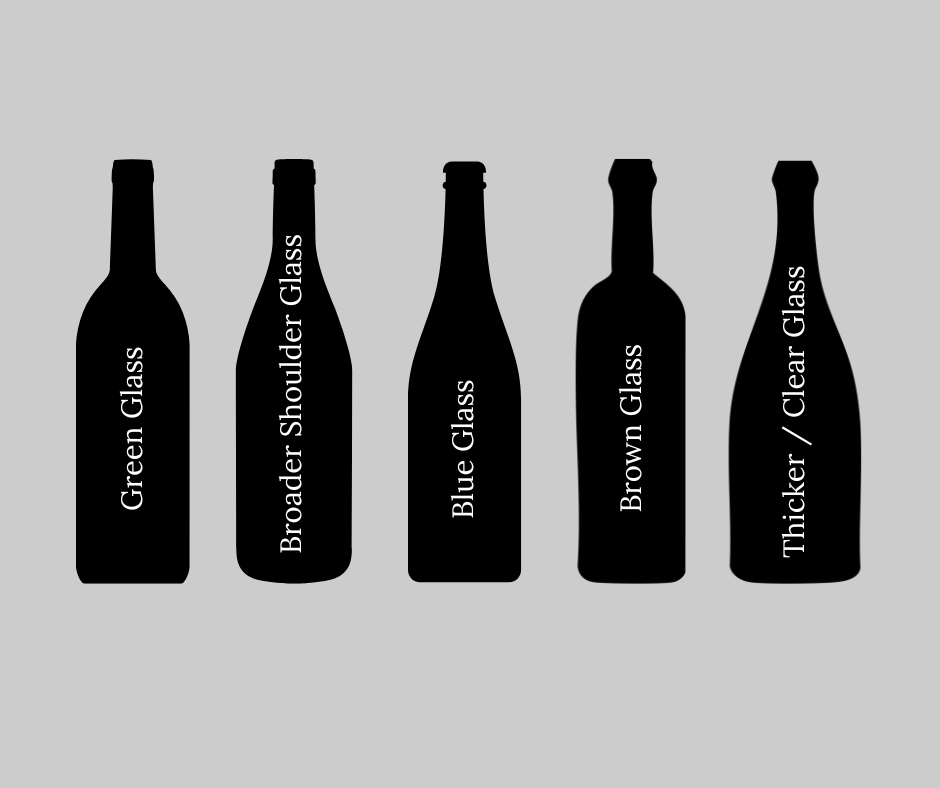
Historically, bottle shapes and colors evolved for functionality reasons. Darker glass, like brown were crucial for protecting the wine from light, which helps maintain the flavor and aromas over time. This used to be vital because climate-controlled storage was limited. Different regions developed distinct bottles shapes, often reflecting the type of wine in the bottles. For instance, blue, tall, slender bottles, traditionally used for white wines as it was believed to enhance the wine’s delicate aromas. Straight sided Bordeaux bottles were associated with full-bodied red wines, its shape designed to accommodate the sediment that can develop in these wines. Sparkling bottles tend to have a thicker glass as they need to be “stronger” to hold the pressure that comes with the carbonation.
The evolution of these shapes became a way to quickly identify what style of wine was within the bottle. Next time you are admiring a bottle of wine, take a moment to appreciate the thought that went into its design. Each shape and color can tell a story, not just of the wine within but the decades of innovation. A little piece of history and science waiting to be uncorked and enjoyed.